
Callahan County Sex Offender Checks
The Texas Public Sex Offender Registry is the main official channel for a Callahan County lookup. It supports searches by person and place across Texas. Start with the county filter when the goal is a broad Callahan County view. Use the name mode when the person is known, or the address and map tools when the concern is tied to a street, town, or ZIP code. Search Baird, Clyde, and Cross Plains as separate city terms when a county-wide result needs a closer check.
Local registration and the public search are linked but not identical. The sheriff serves as registration authority for a resident outside a municipality. Within Baird, Clyde, or Cross Plains, the police chief or municipal authority ordinarily manages registration. Those offices send the record to DPS. The state portal is therefore the best public index, while the correct local office is the place to report a suspected address or compliance issue. No separate Callahan County registry map or public local list was documented.
Callahan County Registry Search Modes
A useful search starts with the question being asked. A name query works for a known person, but common names and aliases require a close comparison of profile details. An address, ZIP, or radius query serves a location-based Callahan County safety check. The map and list may not show the same visual detail, and a pin should never be read as a claim about every person at that site.
The official DPS registry interface shows the controls without requiring a search focused on a private individual.
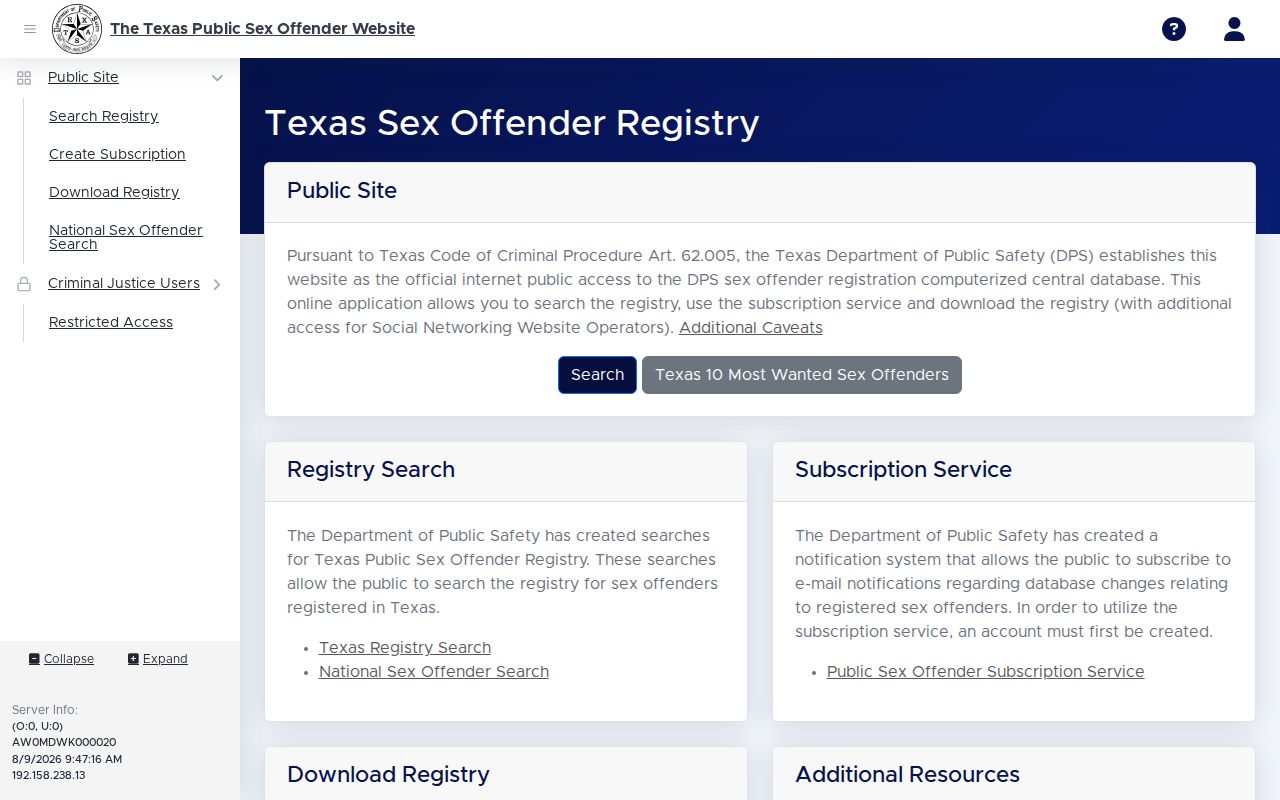
The screen helps a Callahan County user choose the narrowest search mode before reviewing a result. Also inspect any unmapped or non-map category the live service presents. A missing pin is not proof that no registration exists.
Texas Public Registry Searches
DPS runs the Texas registry. The portal may place terms or a CAPTCHA before results, and its controls can change. A disciplined Callahan County search uses both the filter and the profile rather than stopping at a list entry.
- Open the official DPS registry and complete any terms or CAPTCHA screen.
- Select name, address, location, or map mode, then choose Callahan County or a local city where the interface allows.
- Review the full result list, including unmapped entries, and compare identifiers before treating a match as relevant.
- Open the public profile and read the offense, status, address, duration, and verification details together.
| Field or Control | Type | Required | Use |
|---|---|---|---|
| Search by | Tabs or options | Yes | Name, address, map, or other live mode |
| First and last name | Text | Mode-dependent | Use partial or full name as allowed |
| Address or street | Text | Address mode | Combine with city or ZIP |
| City and county | Text or dropdown | Optional | Select Callahan or a local municipality |
| ZIP and radius | Text and dropdown | Optional | Confirm the live radius choices |
| Map or current filter | Toggle | Optional | Compare map and list views |
Note: A portal match is name-based public information, not fingerprint proof that the profile belongs to the person a searcher had in mind.
Callahan County and National Results
The National Sex Offender Public Website adds a cross-state layer. It is useful when a location near Callahan County involves past addresses outside Texas or when the person may have moved between states. NSOPW federates participating jurisdictions, so a temporary state outage can affect what it returns. The Texas DPS profile remains the primary record for a Texas registration.
The national service's official interface shows the broader search layer available to Callahan County residents.
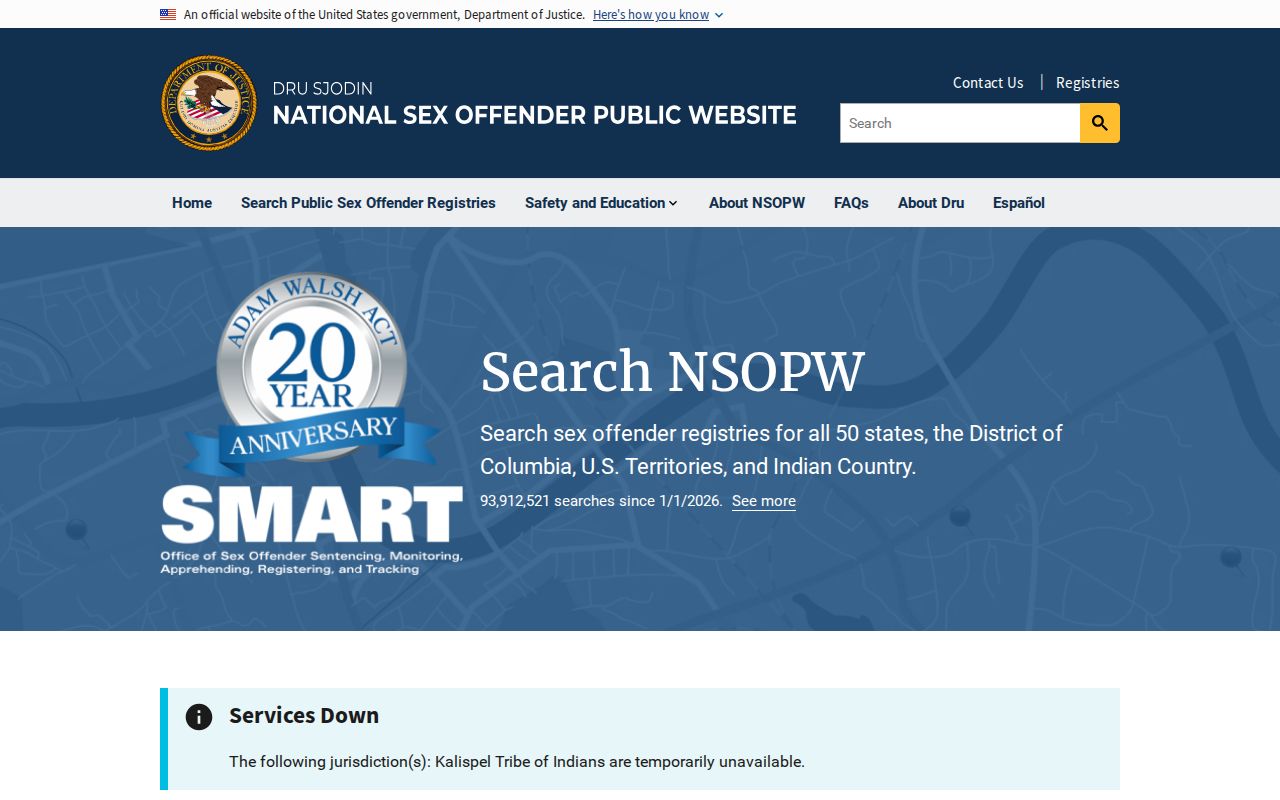
Run the national sweep after the Texas query, then return to the state profile to verify status and local details. This two-step comparison is more useful than assuming a single no-result screen is final.
Callahan County Registry Profiles
A public profile combines identity, registration, and offense fields. It may display a photograph, aliases, physical traits, birth date or age, registry identifier, risk level, status, registered location, offense description, conviction or adjudication date, and a projected registration end date. Some profiles also show scars, marks, tattoos, a victim age or sex category when allowed, institutional information, and qualifying vehicle data. Read the record as a whole.
| Name and aliases | Public names used to help distinguish a person. |
|---|---|
| Photo and description | Image plus sex, race, height, weight, hair, eyes, age, and marks where shown. |
| Registered location | The public address or location information supplied under registry rules. |
| Offense record | Description, statute, adjudication or conviction date, and permitted victim category. |
| Risk and duration | Texas risk label, registration status, and ending date where available. |
| Verification details | Information tied to reporting and periodic verification. |
DPS does not publish Social Security numbers, driver-license numbers, telephone numbers, online identifiers, employer contact details, victim identity, or other confidential fields. A juvenile court may also order information nonpublic. The absence of a protected field is part of the law, not an incomplete Callahan County search.
Callahan County Registration Authorities
Address determines the local registration route. The Callahan County Sheriff's Office handles residents outside municipal limits. A person within Baird, Clyde, or Cross Plains ordinarily reports through the city police chief or municipal authority. Registration data then reaches DPS for the public state record. This split matters when a Callahan County profile seems stale or a suspected move has not appeared.
The sheriff lists a 24-hour information number at its official county page. The page gives 432 Market Street, Baird, and (325) 854-1444. A separate county directory lists another sheriff address and number, so call before trying to visit a registration or records counter. For suspected noncompliance, contact the correct local authority or the DPS Sex Offender Registry unit at (512) 424-2800. Do not confront the listed person or household.
The DPS registration program page explains how local reporting feeds the statewide system.
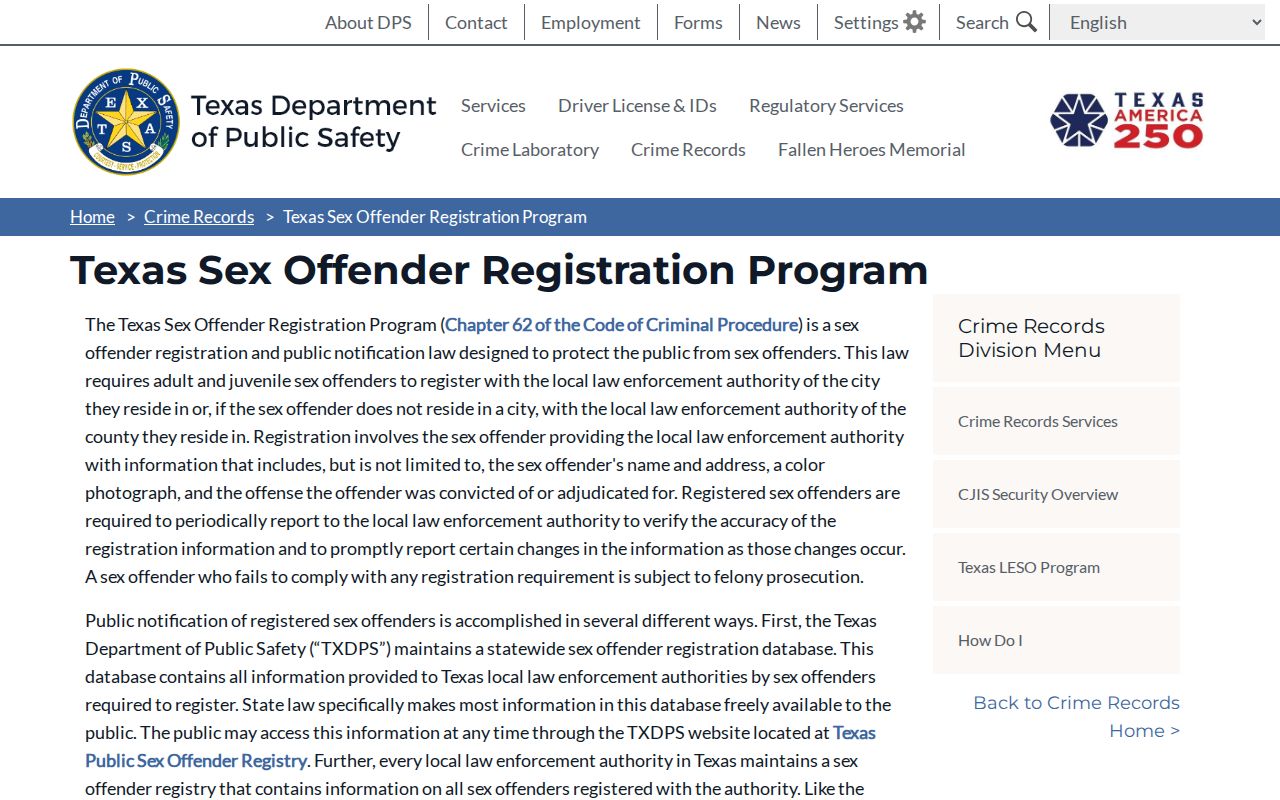
That state overview is the right source for current program rules, while the Callahan County or city authority handles the local registration contact.
Registration Levels and Duties in Texas
Texas does not use federal SORNA Tier I, II, and III labels as its public duration table. State registration length turns chiefly on the reportable offense and Article 62.101. A low, moderate, or high risk assessment can affect notification and verification practice, but it does not replace the offense-based rule. That distinction prevents a common Callahan County reading error.
| Texas Category | General Duration | Public or Verification Effect |
|---|---|---|
| Adult, non-lifetime reportable offense | Ten years after discharge from custody, parole, or community supervision | Periodic verification applies under current rules |
| Lifetime offense or repeat reportable conviction | Lifetime | See Article 62.101 and the DPS offense list |
| Juvenile adjudication | Generally ten years after disposition or discharge | A court may alter, exempt, or restrict publication |
| Low, moderate, or high risk | Not a duration tier | May affect notification and verification practice |
Registrants generally report within seven days under the rules DPS describes. Some verify every 90 days. Ten years runs after discharge from incarceration, parole, or community supervision, not simply from the date of conviction. Check the current statute and DPS guidance before calculating an end date.
Callahan County Notification Context
Texas registration began in 1991 and has retroactive provisions for specified convictions or adjudications dating to September 1, 1970 when the person remained in the justice system on or after September 1, 1997. High-risk or civilly committed notifications may be mailed in English and Spanish to nearby homes and businesses. The governing distance can depend on local population: one mile in an area without a municipal subdivision and three blocks in an area that has one.
The state's crime-data program page gives useful context on how Texas agencies submit public-safety information.
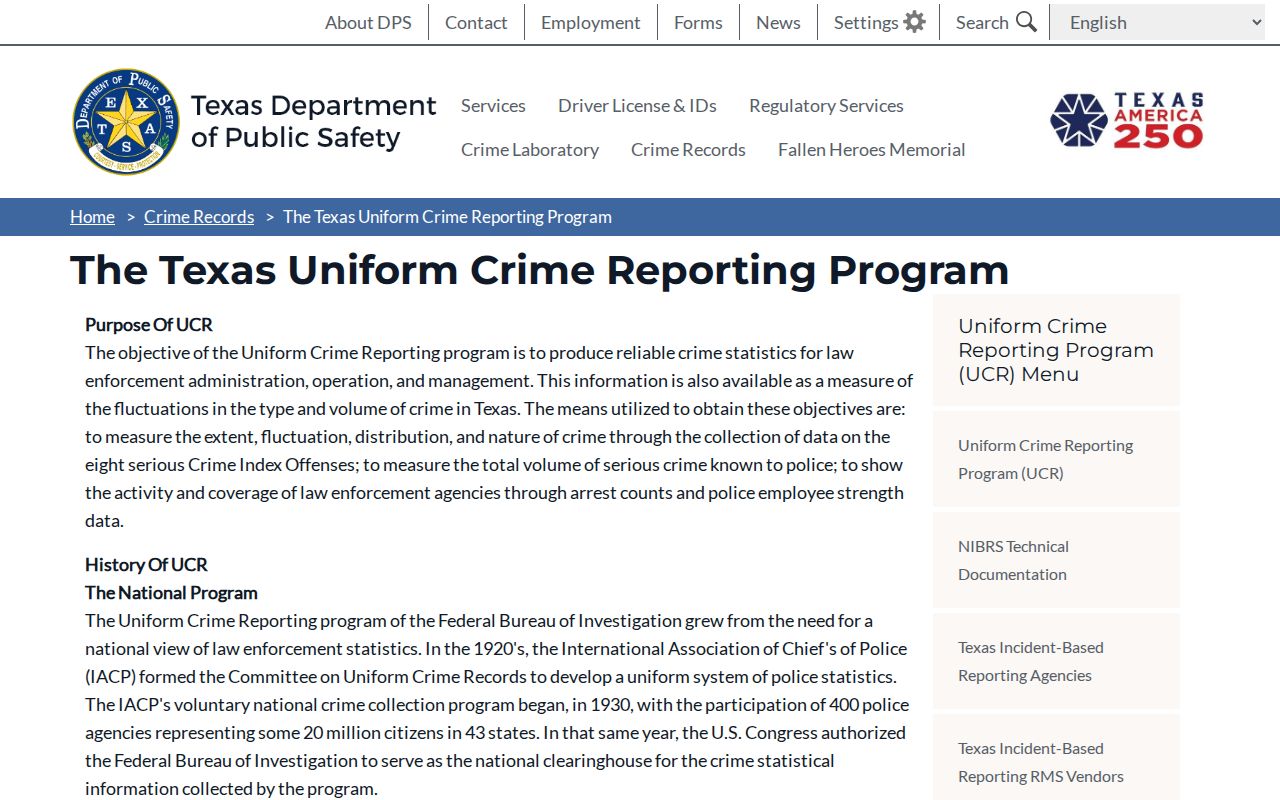
Registry reporting is its own statutory program, yet the image underscores a key point: public systems rely on data supplied by local agencies. A lag or suspected error should be taken to the registering authority and DPS rather than resolved through guesswork.
Correcting Callahan County Registry Information
When a Callahan County profile appears wrong, first note the registry identifier, the exact field at issue, and the local registration authority shown by the address. Contact that authority for an address or verification issue. Contact DPS for a state display or program question. A public user should not publish a correction, contact a household, or infer noncompliance from a stale screen.
Registration may end only under the governing statute, a qualifying court action, or another lawful change. An end date cannot be worked out from the conviction date alone. The sentence, discharge date, offense category, repeat-offense status, juvenile orders, and other facts can matter. Failure to comply with registration duties can be prosecuted as a felony, which is why suspected noncompliance belongs with law enforcement.
Using Registry Information Lawfully
The registry exists for safety planning and community awareness. Use a Callahan County result to understand the public record, check an address through official tools, and decide whether to ask the local authority a factual question. Never use the data to threaten, shame, follow, confront, or organize action against a listed person or that person's household. Public access does not grant a right to misuse the information.
Texas registry warning: Misuse of registry information is a crime under Texas Code of Criminal Procedure Chapter 62, including Articles 62.005 and 62.009. It never authorizes harassment, threats, or vigilantism.
Community notice should prompt calm verification through DPS or the correct Callahan County registration authority. If immediate danger exists, call emergency services. For a suspected reporting violation that is not an emergency, use the sheriff, municipal authority, or DPS SOR unit. The registry is a public-safety record, not proof of current misconduct.